Nina Winchester
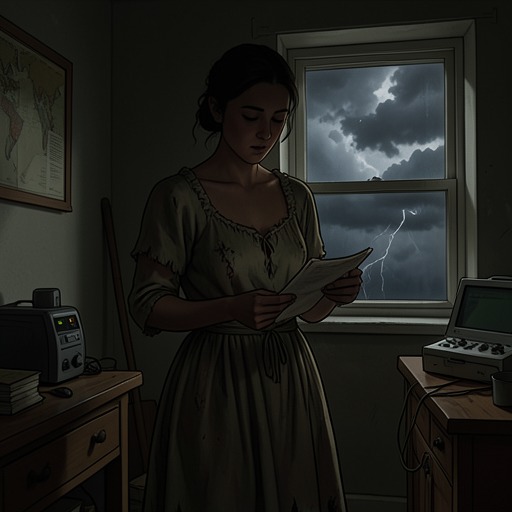
The HousemaidNina Winchester’s story turns the image of the capable wife inside out. She is a mother, homemaker, and host who can appear to inhabit a nearly ideal marriage; privately, she has spent years trying to escape Andrew Winchester’s control. Her struggle is not simply to leave a husband but to protect Cecelia Winchester, counter the power of her own mental-health history, and find a way out of a house where ordinary domestic life has become part of the machinery of confinement.
Identity and Domestic Role
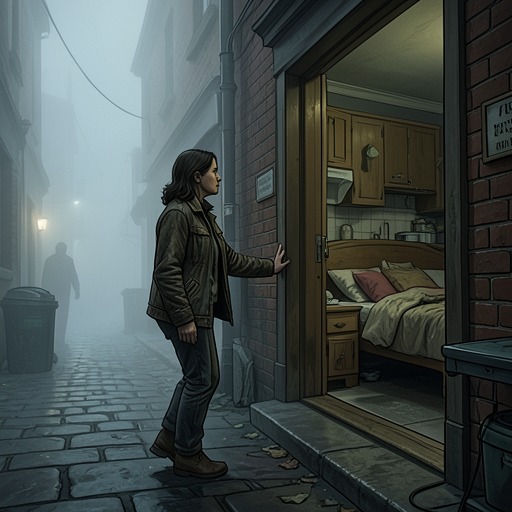
When Nina interviews Millie Calloway, she asks her to talk about herself, then explains that Millie can unpack before beginning the housecleaning. Nina will be preparing for a Parent Teacher Association (PTA) meeting the next day. The exchange establishes her as the household’s organizer and Millie’s employer, with domestic work arranged around Nina’s public commitments. Yet a small gesture unsettles the smoothness of the scene: Nina wipes her hands on her thighs even though they are spotless. The detail is observable, not an explanation of her feelings, but it gives the interview a strained undertone.
The next morning, Millie finds Nina systematically destroying the kitchen. The abrupt contrast between the PTA preparations and this scene makes Nina’s household role difficult to read as simple composure. The evidence does not state why she is wrecking the kitchen; its significance lies in the disturbance it introduces into the orderly domestic setting she has just presented.
Marriage, Motherhood, and Control
Nina describes a marriage that has lasted seven years and acknowledges what makes Andrew appear, from the outside, almost perfect. He has supported her financially, acted as a father figure to Cecelia, and seemed even-tempered and agreeable. She contrasts him with men who drink heavily or have affairs, concluding that he is almost perfect. The praise matters because it shows how a socially legible picture of a good husband can coexist with the reality she describes elsewhere.
Nina says she has tried everything she can think of to get out. She bargained to leave with Cecelia and only the clothes on her back, but Andrew laughed. Her history of mental-health problems gives him a ready way to threaten her: she fears he could tell the police that she had kidnapped Cecelia and intended to hurt her again. The threat makes motherhood both the reason Nina must escape and the vulnerability Andrew can use to obstruct her.
She also tries appeasement. Hoping not to give Andrew an excuse to take her to the attic, she cooks homemade dinners, keeps the house spotless, and pretends not to feel repulsed during sex. Still, he finds fault with things she could not have imagined were wrong. Nina’s account presents the work of a perfect wife not as a route to safety but as an impossible test whose rules remain with Andrew to set.
Control extends through Cecelia. If the child does something unacceptable, Nina says, it is Nina who is punished. Andrew buys Cecelia itchy, frilly dresses she hates, and other children mock her for wearing them. Cecelia nevertheless obeys because she knows that refusing to wear a dress or getting it dirty may cause her mother to disappear for days. Nina understands this as a lesson imposed on both of them: even clothing can be made a privilege, and Cecelia’s ordinary choices can be turned into leverage against her mother.
The Reputation That Traps Her
The story lets Nina’s reputation arrive through other people before her own account fully explains its uses. Millie asks why people say Nina is crazy; another woman replies that Nina tried to drown Cecelia in the bathtub. The allegation identifies a real and grave act, while Nina’s later description of Andrew’s threats shows how her mental-health history can also be invoked to make her fear that no one will believe her if she tries to leave with her daughter. Her predicament is therefore not presented as innocence untouched by harm: her past actions and vulnerability are both part of the danger surrounding her.
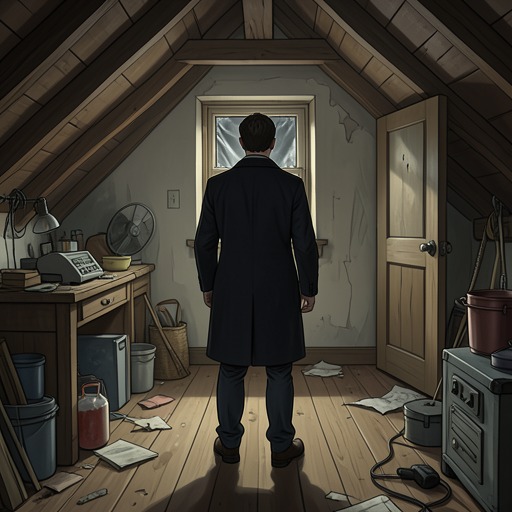
The chapter labels marked with Nina’s name signal a shift into her own narration. In that account, she recounts Andrew explaining that the space below the attic is soundproofed, so nobody would hear her scream, even if he were hosting a dinner party downstairs. The contrast between a dinner party and an unheard prisoner makes the house’s double life explicit: its social rooms can sustain appearances while the attic isolates the person Andrew has confined.
Millie as Replacement and Route Out
Nina initially hires a maid hoping that the woman might become her replacement: if Andrew fell in love with someone else, Nina imagines, he might finally let her go. She later makes clear that this first explanation is not the whole story behind hiring Millie. After paying a private investigator to examine Millie’s past, Nina learns information about Wilhelmina Calloway. She gives Millie a copy of the attic-room key and leaves pepper spray in the blue bucket in the closet. The key and pepper spray are concrete provisions, not merely signs of a hoped-for romantic substitution; Nina has begun preparing Millie for a role in her escape.
Her assessment of the prospective replacement is itself shaped by Andrew’s preferences. Nina believes the woman must be more beautiful than she is, younger, and young enough to give Andrew the children he wants. She also says the woman must look good in white, because Andrew loves that color. Nina has deliberately let herself go in the preceding years, and her description makes clear that she is measuring the replacement by the standards through which Andrew evaluates women. The plan draws its opportunity from those standards even as it exposes their power over Nina’s sense of what he will accept.
Departure and Uncertain Outcome
At one point Nina laughs at Andrew’s expression, then abruptly stops to remind him that she is leaving town the next day. Andrew answers calmly that she is not in a position to make demands. The exchange puts her announced departure beside his refusal to treat it as a choice she can enforce. Nina can state her intention, but the line of control in their marriage remains visible in his response.
By the time Nina makes up her mind, she sees no ordinary way out: if she leaves the house, she believes it will be in handcuffs. That conclusion gathers together the obstacles she has described—Andrew’s control, her fear that her mental-health history will be used against her, and the danger attached to taking Cecelia. The evidence records the decision point and the bleak terms in which Nina understands it, without specifying here what she decides to do next.
Narrative Significance
Nina’s arc is built around the difference between domestic appearance and domestic power. A spotless house, a PTA meeting, homemade dinners, and the image of an agreeable husband belong to the same world as the attic, soundproofed rooms, and punishments administered through Cecelia. The contrast does not make the public image unreal; it shows how that image can conceal the conditions Nina describes.
Her turn toward Millie changes the shape of her resistance. Nina first imagines another woman as a replacement who might persuade Andrew to release her; later, she places a key and pepper spray where Millie can use them. That change gives Nina’s plan its central reversal: she works within the household arrangement Andrew controls to create a possible means of escape. Yet her final stated expectation remains arrest, not freedom. The gap between the practical help she prepares and the handcuffs she anticipates leaves her story poised between strategy and the force of the system she is trying to outrun.